

Optimally cared for
Hard fruit
Hard fruit, also known as pome fruit, is a category of fruits distinguished by their firm skin. The most common varieties are apples and pears. For optimal care of hard fruit, it is important to water fruit trees regularly using drip hoses, especially during dry periods.
– Hard fruit
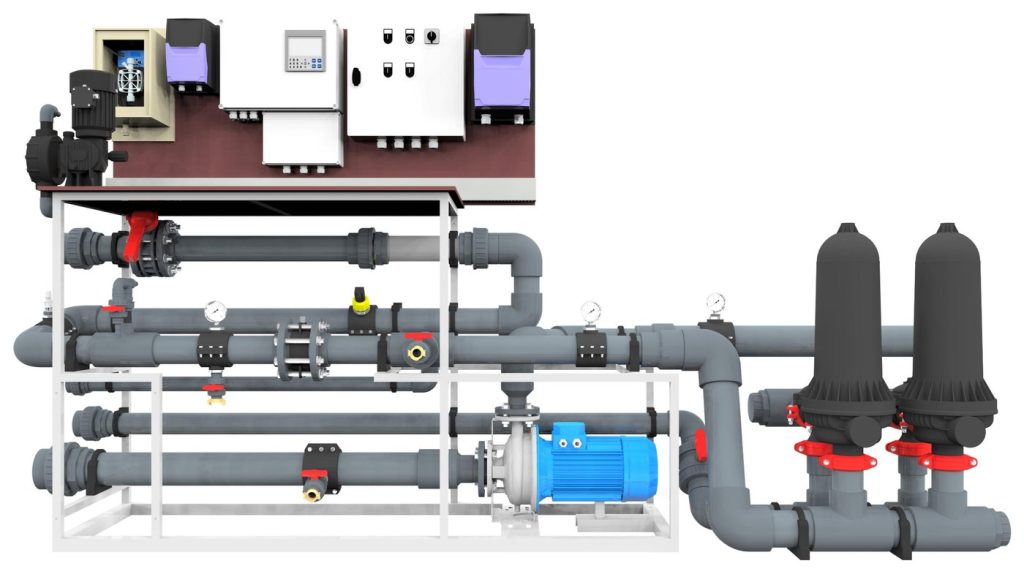
VGB fertigation system
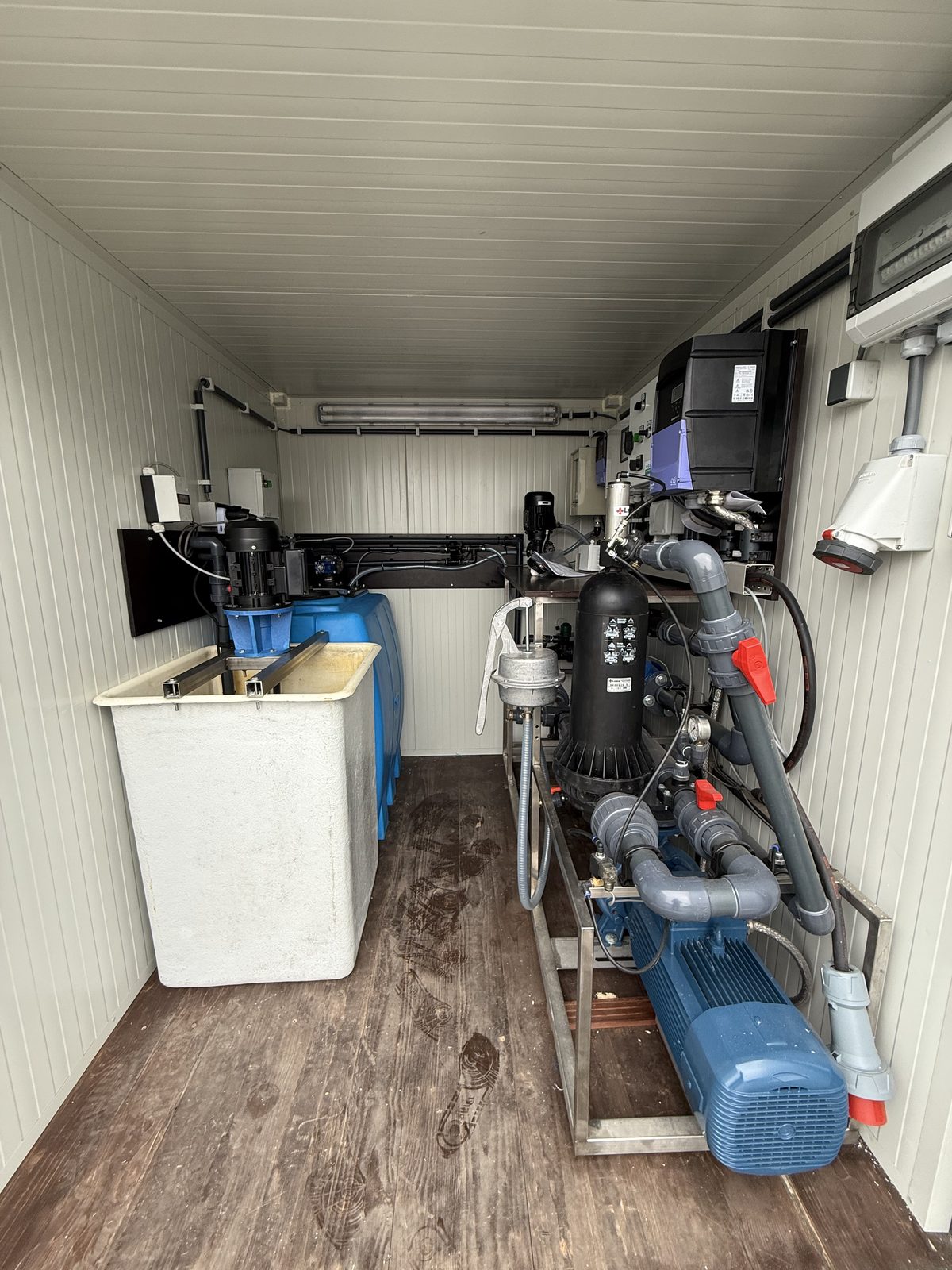
- Built into 8 ft or 20 ft container
- Decoder system for controlling valves and sensors
- Dual EC and pH control
- Frequency control pumps
- Stainless steel frame
- Webapp – internet
- Water meter + alarm
- Automatic filter system
Installations in practice
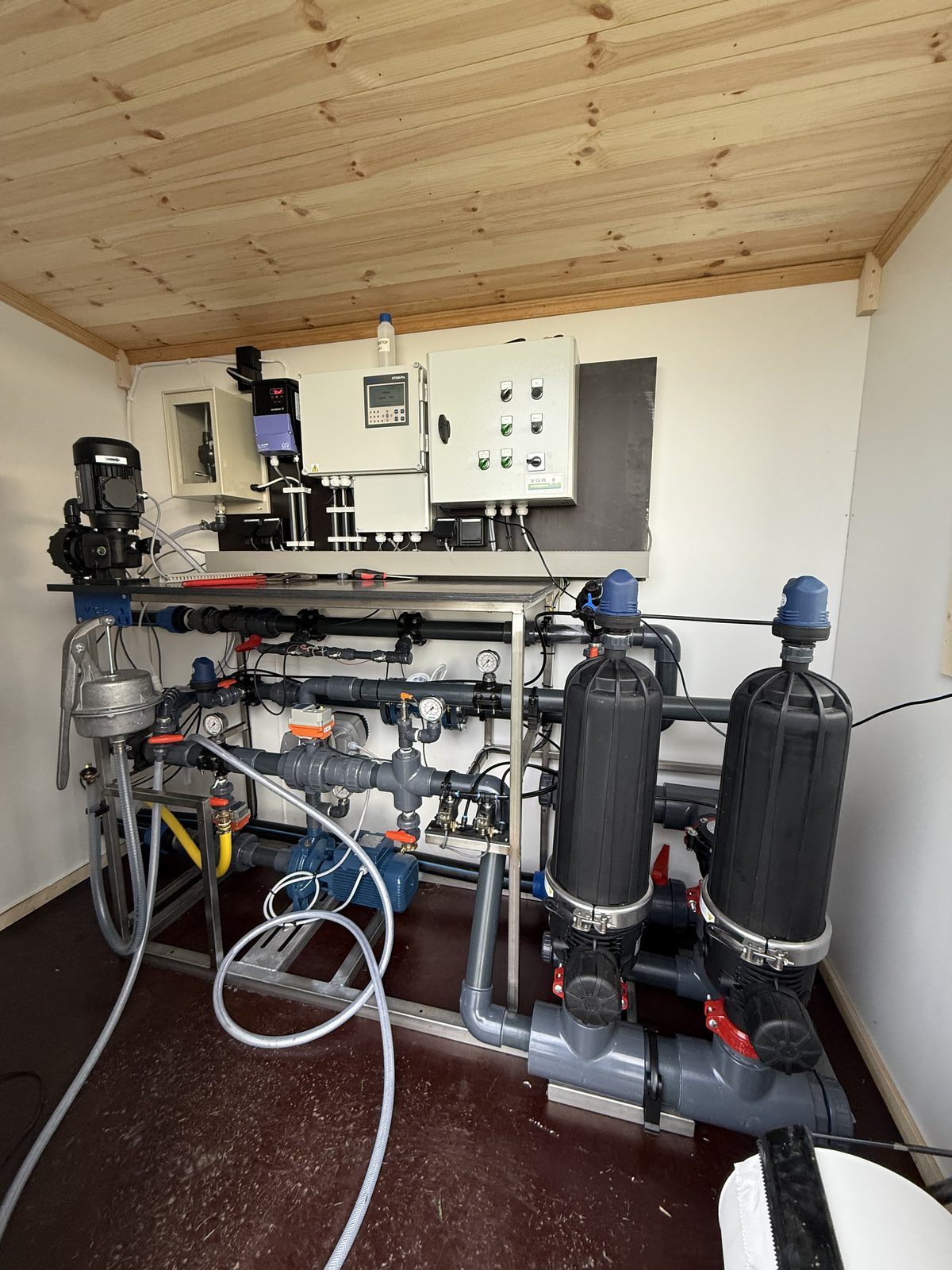
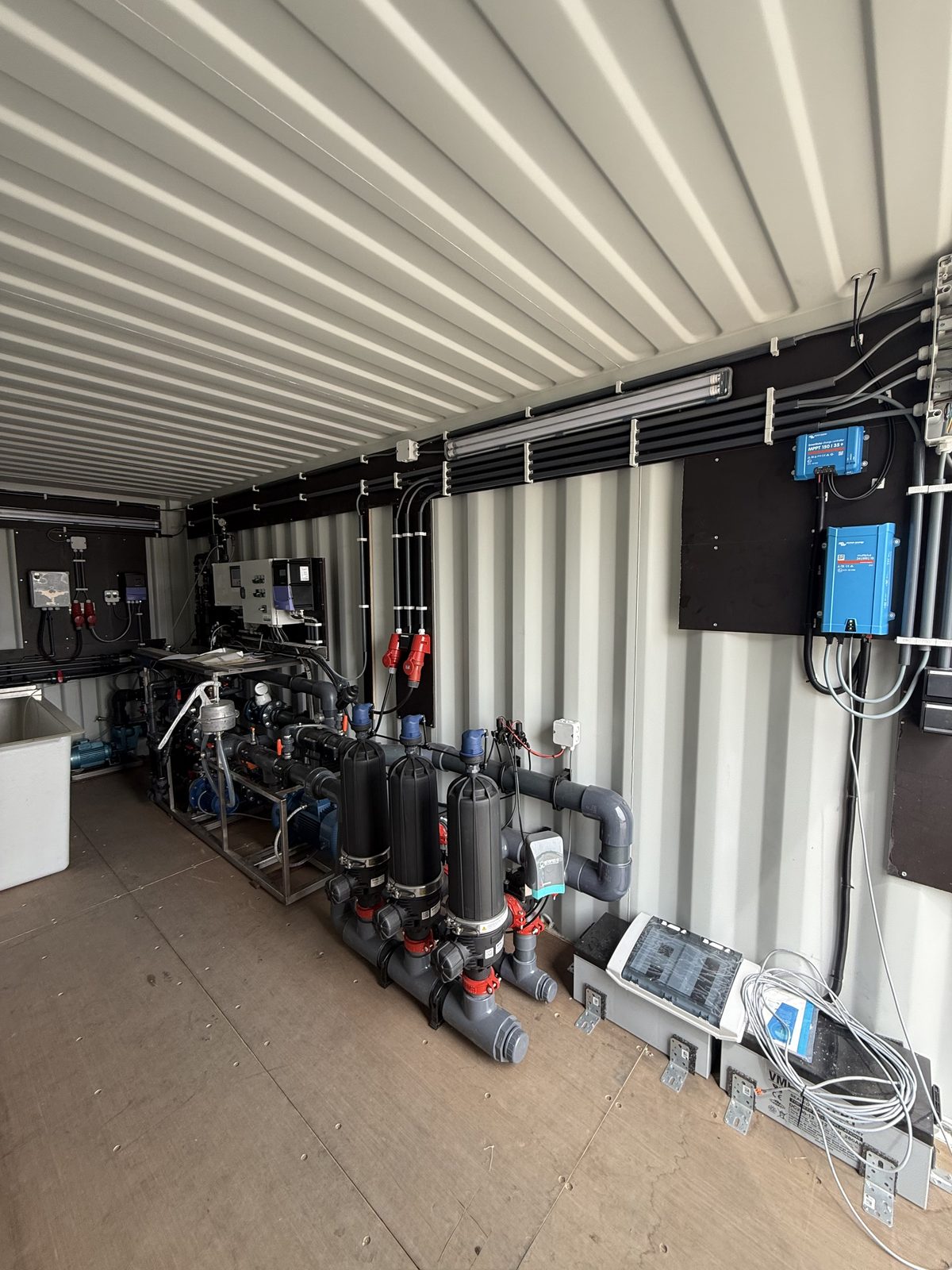
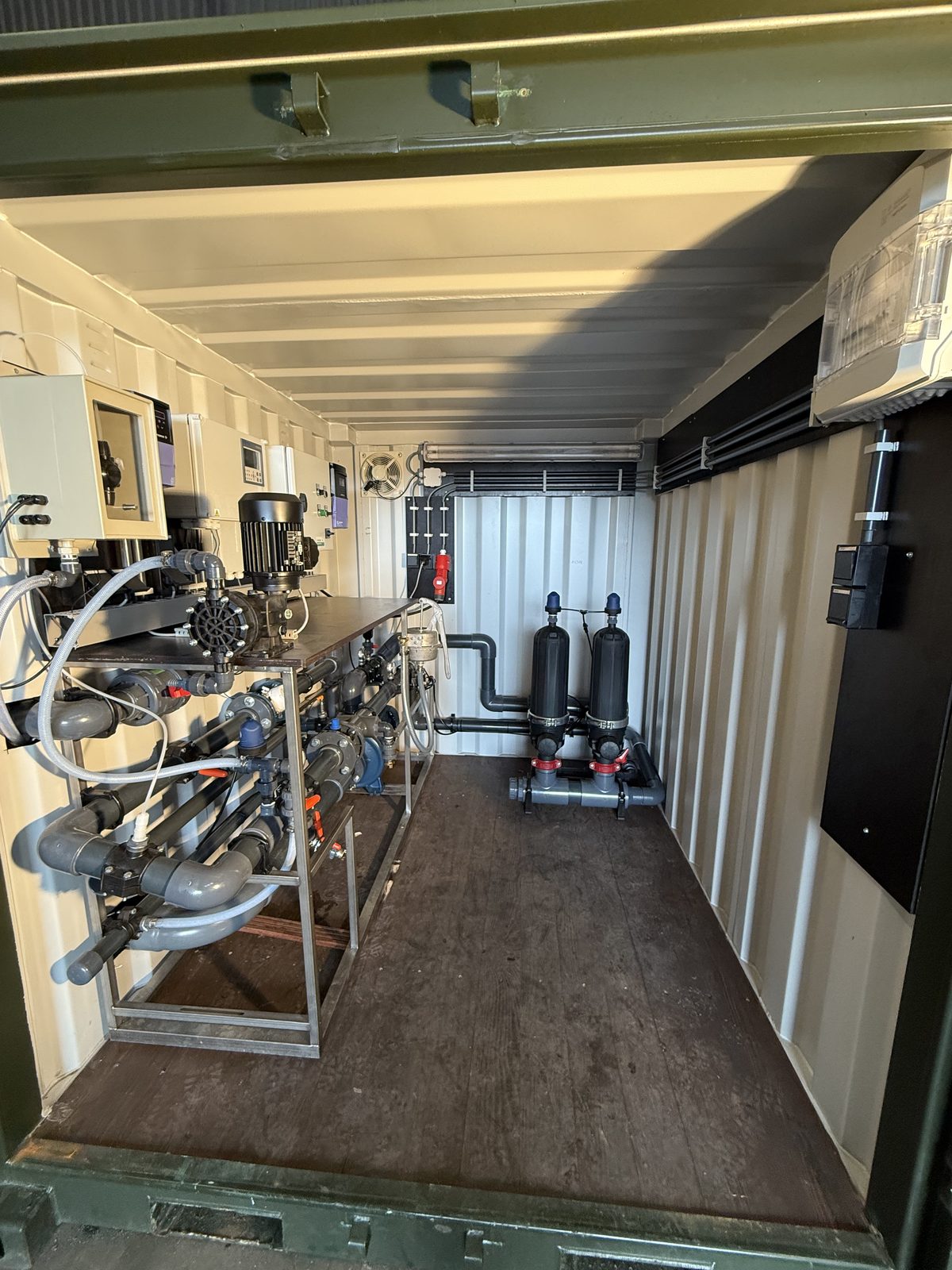
Fertigation for apples and pears
With fertigation you give your apple and pear trees water and fertiliser together through the drip line, exactly when the tree needs it, in small doses you set per block. For more than 40 years VGB Watertechniek has designed and built fertigation systems for fruit growers across Europe, from a single orchard to farms with dozens of blocks.
Dry springs and summers are becoming more common. Instead of correcting with a few large fertiliser applications, fertigation lets you follow the tree week by week.
Fertigation for apples
Modern apple orchards are planted densely, usually on the dwarfing rootstock M9. These trees have a small root system and little buffer: a few weeks without rain shows up straight away in shoot growth and fruit size. Fertigation delivers water and nutrients right into that limited root zone, in small doses spread over the season.
An apple tree needs something different at each stage. Around bloom and cell division, nitrogen is important for a good start; during fruit growth demand shifts towards potassium; and after harvest the tree builds reserves for next year. With a fertigation unit you set a recipe for each stage and adjust it based on your soil, water and leaf analyses.
Calcium for the fruit itself, important against bitter pit, is mainly applied as a foliar spray in practice. Fertigation makes sure the tree takes up water and nutrients evenly, which gives a stable basis for fruit quality.
What fertigation does for apples
- Even fruit size and quality, because every tree in the block receives the same dose.
- Young plantings establish better, because water and nutrients reach the roots from the first year.
- Less fertiliser and less leaching to groundwater, thanks to small, frequent doses.
- Adjust per block or per variety, for example Gala, Elstar, Jonagold or club varieties with their own nutrient needs.
- Less labour: water and nutrients in one go, controlled from your computer or phone.
Fertigation for pears
With pears, a lot comes down to fruit size and calm growth. In north-western Europe, pear trees are usually grafted on quince rootstock. Quince roots shallowly and is sensitive to drought: a water shortage in summer shows up as smaller pears. Fertigation keeps the root zone evenly moist and feeds the tree without large peaks.
At the same time you want to avoid excessive shoot growth. Because fertigation lets you give nitrogen in small portions at the right moment, you keep better control of the balance between growth and production.
Benefits of fertigation for pears
- Better control of fruit size, which matters for selling varieties such as Conference and Doyenné du Comice.
- A calmer growth balance, because nitrogen is applied in small portions instead of a few large doses.
- Water and nutrients exactly in the shallow root zone of the quince rootstock.
- Less fertiliser leaching to groundwater.
- Adjust per block and monitor remotely through the web app.
Feeding matched to your analyses
Fertiliser advice in fruit growing is based on soil, water and leaf analyses. A fertigation unit turns that advice directly into a schedule per block. If a mid-season leaf analysis shows you need to adjust, you change the recipe without having to drive through the orchard.
Combining fertigation with frost protection
Many apple and pear growers use the same water source for fertigation and for frost protection irrigation during bloom. We design both systems to work together, including water treatment if your source contains iron or manganese. Every unit is put together for your orchards, your water source and the number of blocks, and delivered fully tested and ready to use.
Frequently asked questions about fertigation for apples and pears
What does a fertigation system for apples or pears cost?
That depends on the number of hectares and blocks, your water source and what is already in place, such as drip lines or a pump. If you wish, we reuse as much of your existing equipment as possible and extend the system step by step. Because every system is designed to measure, we prepare a quotation for your situation after a first conversation.
Can I add fertigation to my existing drip system?
Yes. A fertigation unit can often be connected to an existing drip installation. We first check whether the pipes, filters and drippers are suitable for the new doses.
Can I use the same system for apples and pears?
Yes. One fertigation unit controls multiple blocks, each with its own recipe, so apples and pears each get the right dose.
When do I start fertigating pears?
Fertigation usually starts around bloom and continues until after harvest, when the tree builds reserves. The exact schedule depends on your soil, variety and analyses; we draw it up together with you and your crop advisor.
How do I operate the system?
Through the web app on your computer or phone. You see doses, EC and pH per block, and the water meter alerts you when something is off.
What if my well water contains iron?
Iron and manganese can clog drippers. An iron removal system treats the water beforehand, and it can also be added to an existing installation.
Do you work outside the Netherlands?
Yes. We work for fruit growers across Europe. More than 1,000 VGB Watertechniek systems are in use worldwide, with projects in countries such as Belgium, Germany, Romania and Bulgaria.